SUPPORT OF EXCAVATION / RETENTION SYSTEMS
Retention systems support and stabilize soil, allowing for safe excavation and grade changes in challenging environments. We design and install systems such as Soil Mix Walls, Cutter Soil Mix Walls (CSM), Secant Pile Walls, Tangent Pile Walls, Soldier Pile and Lagging, Sheet Piling, Underpinning, and Tiebacks & Anchors, using engineered methods to retain earth and control groundwater. These solutions are critical for maintaining stability, protecting adjacent structures, and enabling construction in tight urban sites or deep excavation conditions.
SOE / Retention System Solutions:
Soil Mix Walls
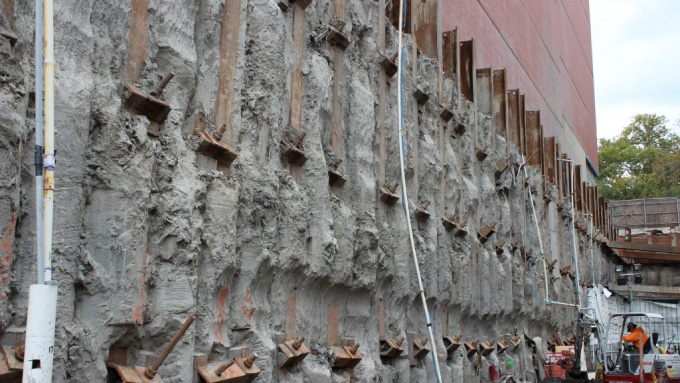
Soil Mixing is a process of mixing a cementitious grout with in-situ soils where the compressive strength of the soil mix mass can increase with increasing injection rate and cement content in the grout.
Cutter Soil Mix Walls (CSM)
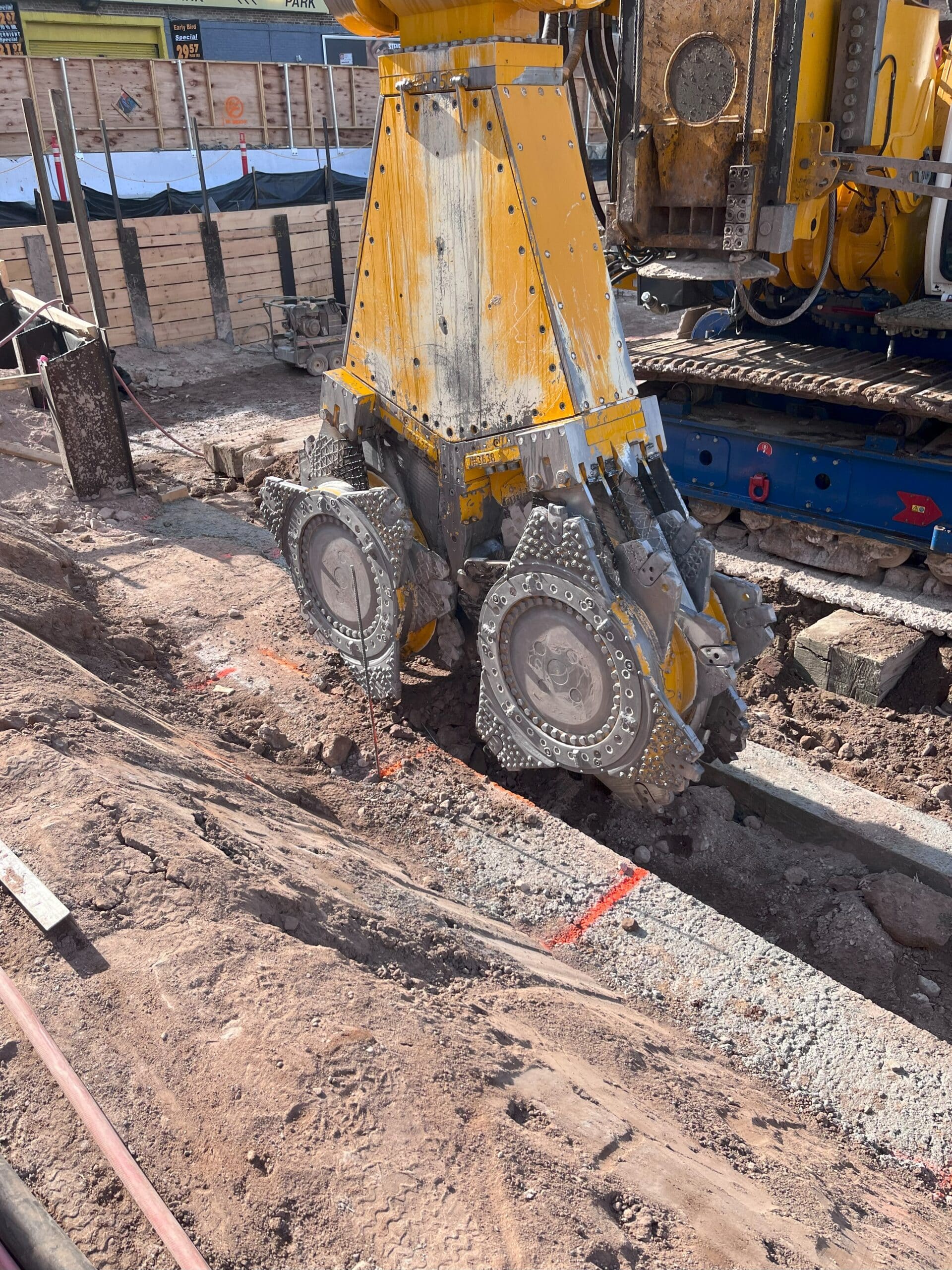
CSM is a process of mixing a cementitious grout with in-situ soils utilizing sets of counter rotating wheels on a Kelly bar system, allowing for construction of rectangular panels eliminating the need to grind or shotcrete the scalloped shape of a secant wall.

Secant Pile Walls
Secant Walls are overlapping (secant) concrete piles typically around the perimeter of a site to provide a groundwater cutoff and support of excavation.
Tangent Pile Walls
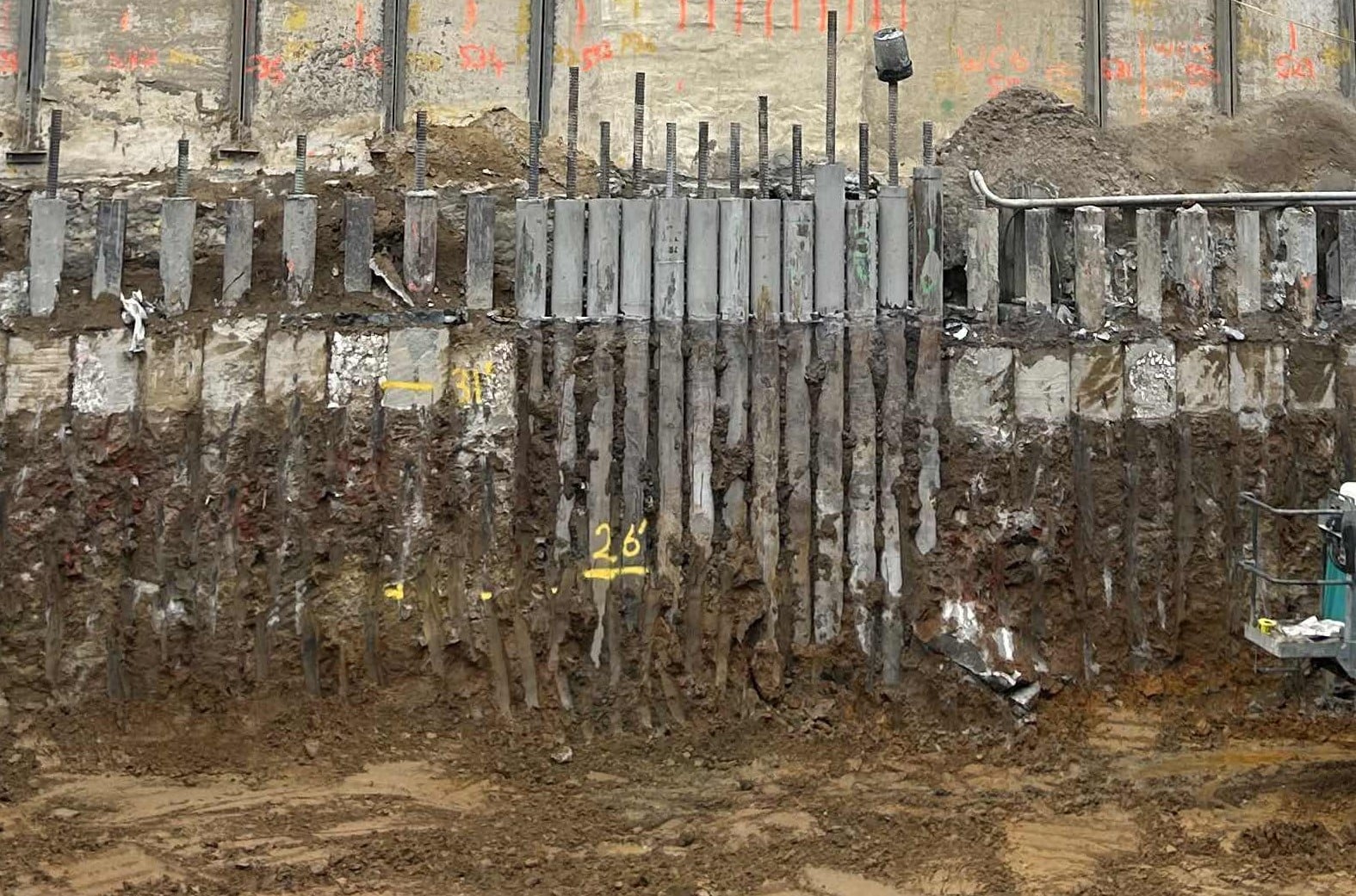
Tangent Walls are installed by drilling a casing into the ground and filling with grout.
Sheet Piling
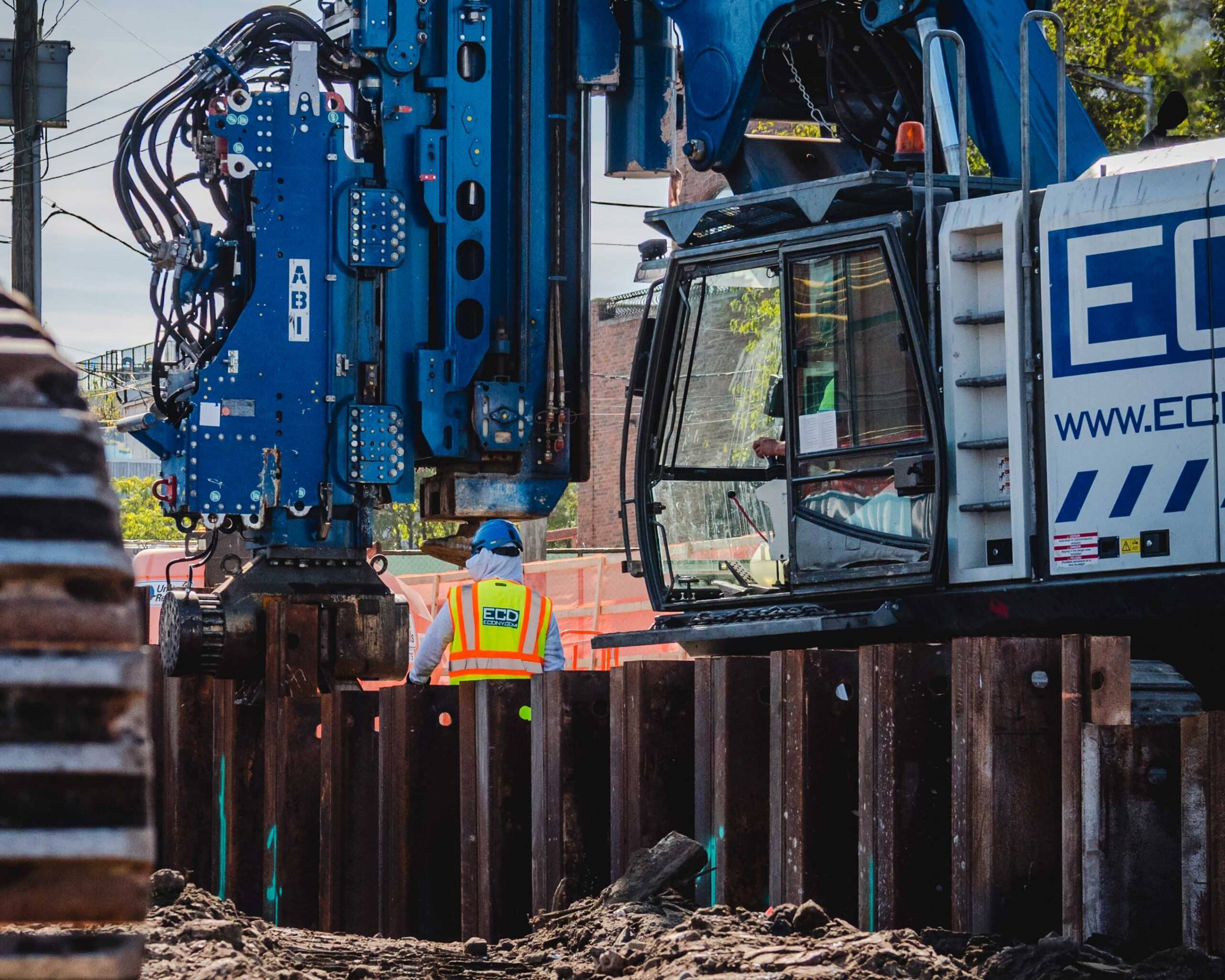
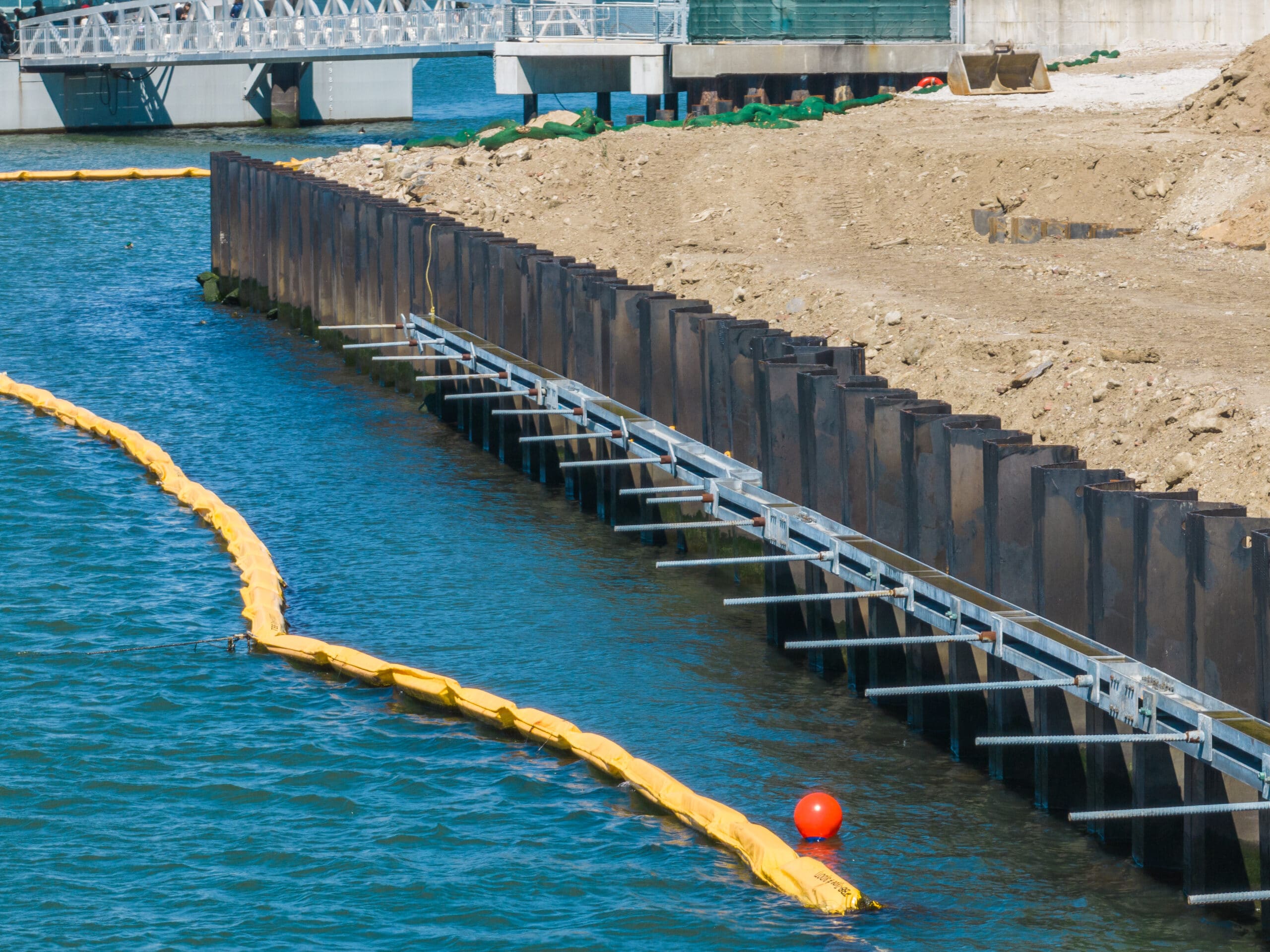
Interlocking steel sheets are installed by vibratory or impact hammers. They are used to create a relatively water tight temporary lateral support for excavations or permanent lateral support to retain soil on waterfronts.
Soldier Pile and Lagging
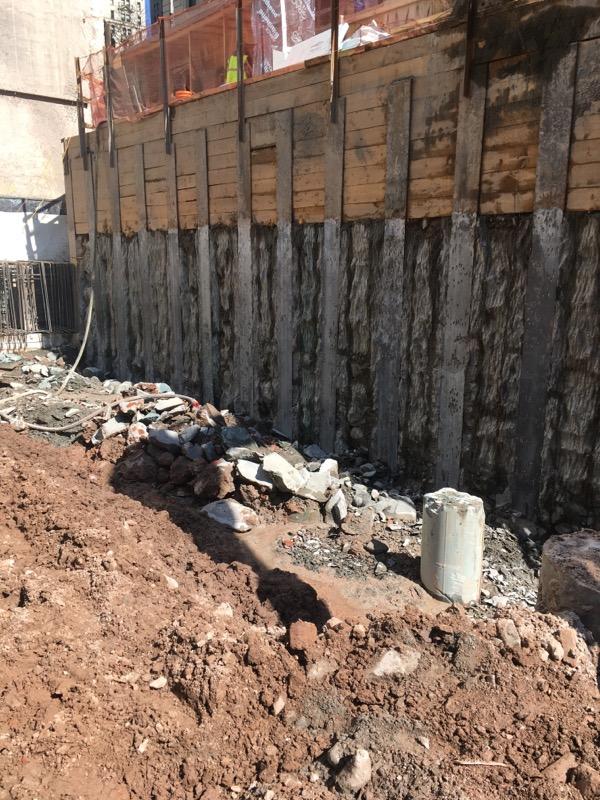
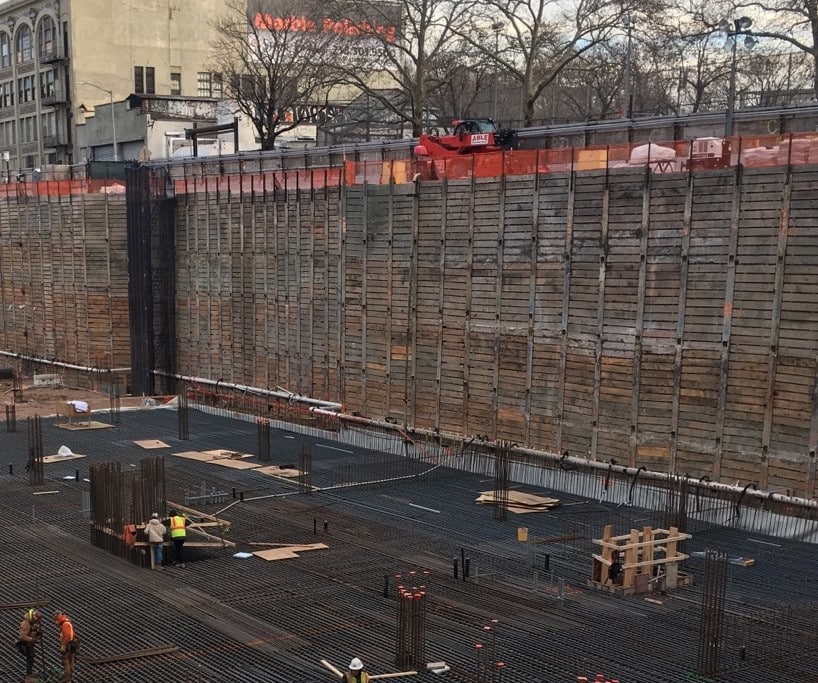
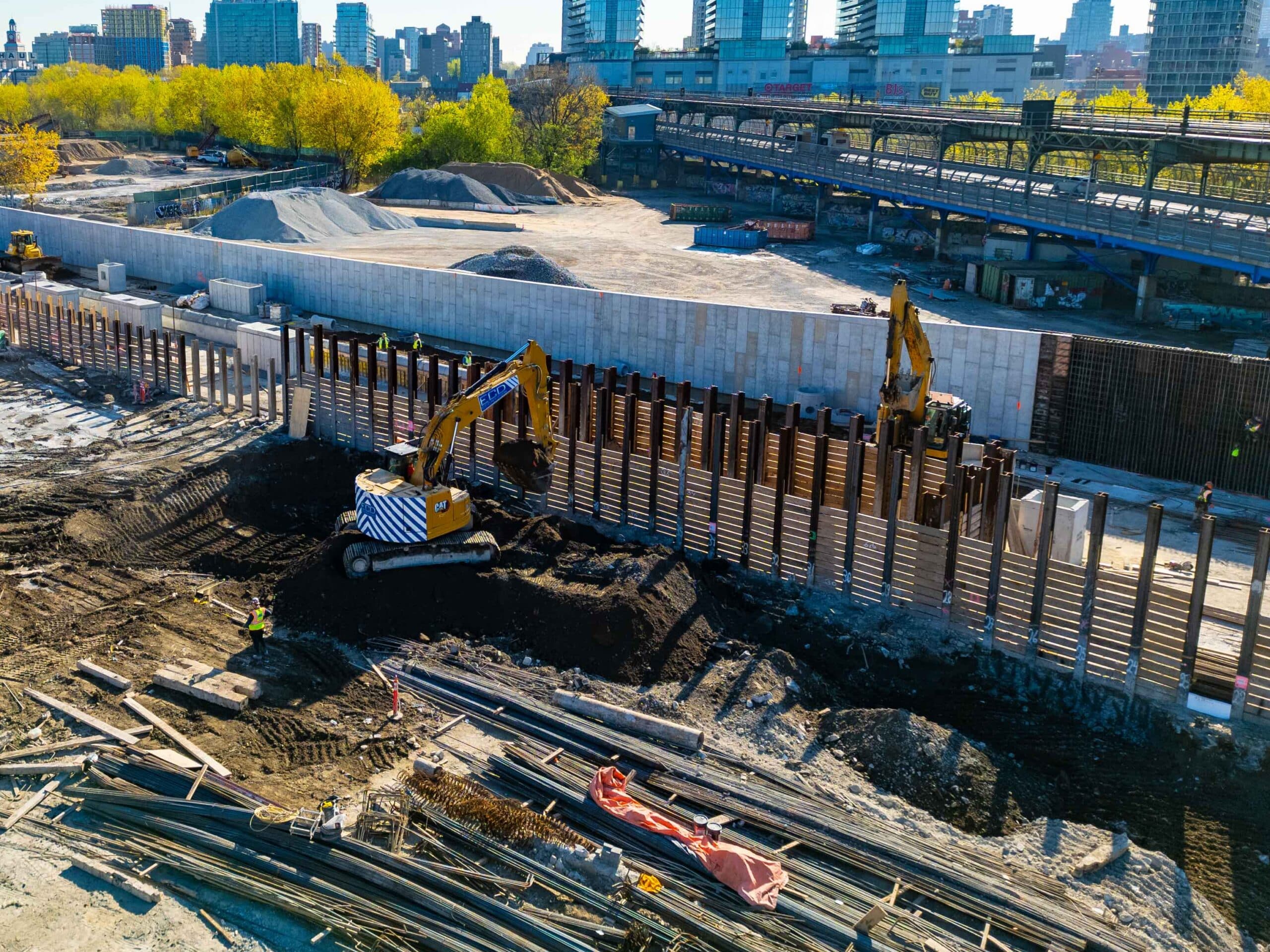
Soldier pile and lagging is a very common method of support of excavation above the groundwater level.

Underpinning
Underpinning is a means of extending an existing buildings foundation to a lower elevation.

Tiebacks and Anchors (Soil and Rock)
Tiebacks are small diameter grouted anchors installed at a slight angle from horizontal typically installed to provide lateral restraint. Rock Anchors can be used to locally to support an unstable rock block or in groups to stabilize an entire rock face.
Related Services
Sheet Piling 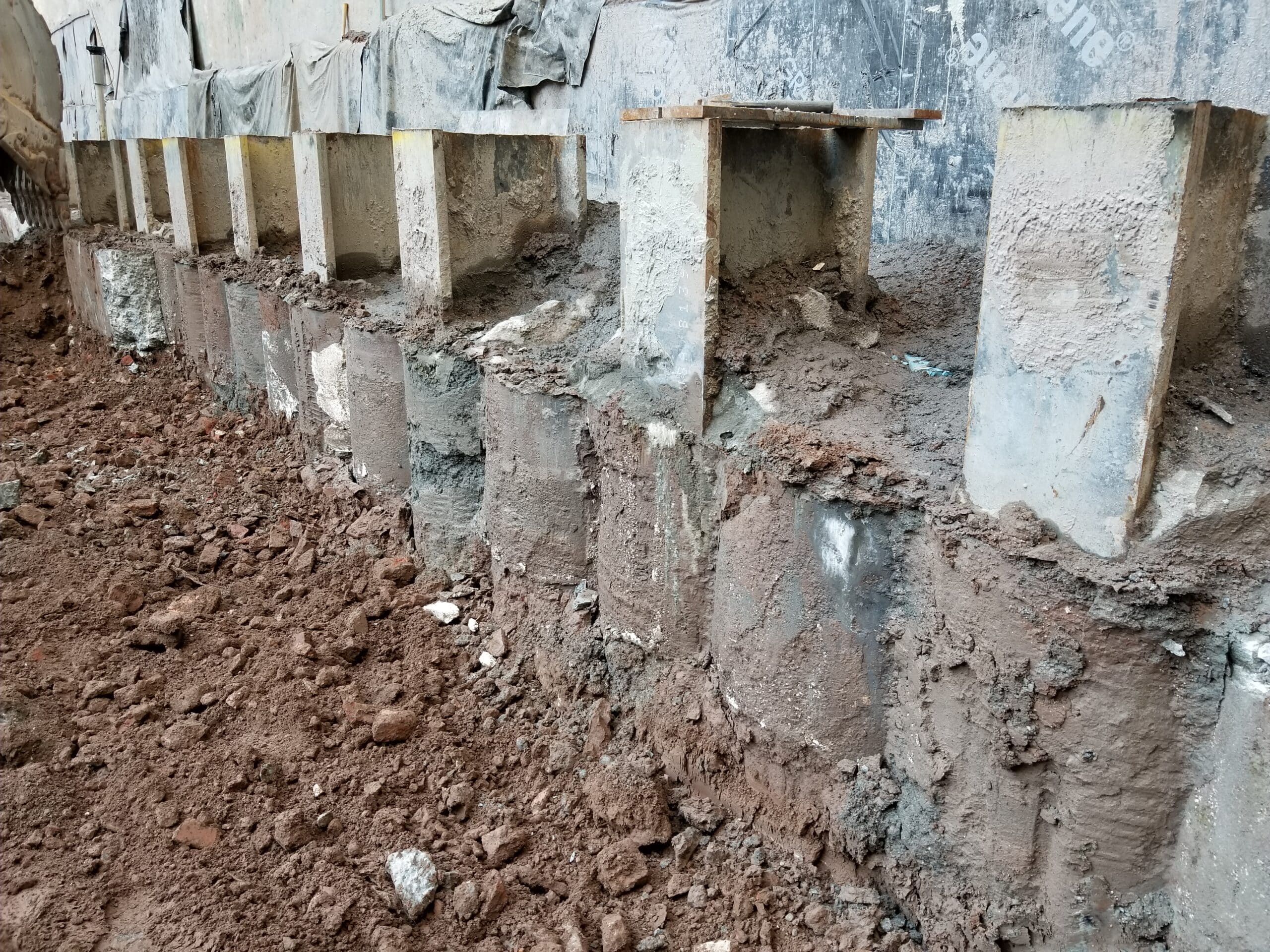
Secant Pile Wall